
Why Am I So Tired in My 40s? The Perimenopause-Fatigue Connection Nobody Told You About
Discover the science behind perimenopause exhaustion and hormonal fatigue in your 40s. Learn how to recognize these symptoms and explore natural strategies to regain your lost energy and vitality.
Khay, Body Essential Hub
7/29/202612 min read
Published: June 2024
Reviewed by: Dr. Kayla Philips, MD — Women's Health Specialist
Written by: Khay, Body Essential Hub
Reading time: 8 minutes
Category: Perimenopause Symptoms | Natural Health | Women's Wellness
Introduction
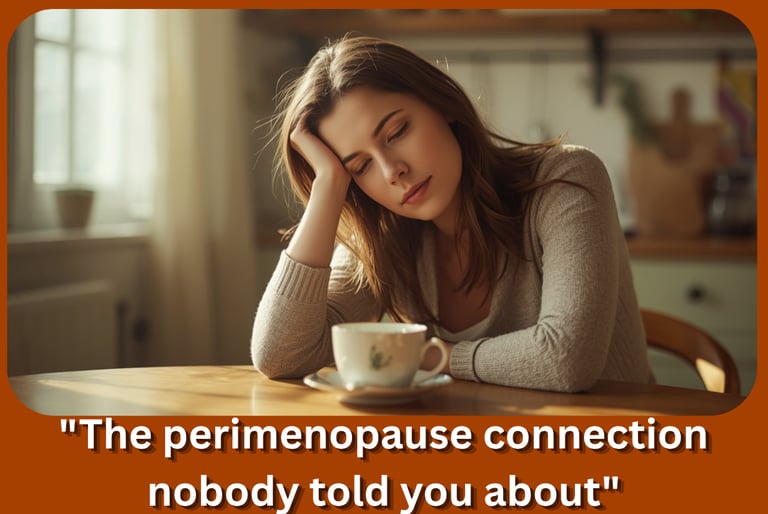
I remember the moment I realized something was fundamentally wrong with my energy. It was 3 p.m. on a Tuesday, and I'd already had my coffee, eaten a healthy lunch, and gotten eight hours of sleep the night before. Yet I felt as though I could barely keep my eyes open. I wanted to sleep. Not the kind of tired that comes from a long day, but a bone-deep exhaustion that no amount of rest seemed to fix.
That's when I discovered perimenopause.
If you're in your 40s and asking yourself, "Why am I so tired all the time?" you're not alone. Roughly 40% of women in perimenopause experience persistent fatigue, and because this symptom often sneaks up quietly-without the dramatic hot flashes that dominate the conversation-it goes misdiagnosed or dismissed for far too long.
The exhaustion you're feeling isn't laziness. It's not a sign of weakness. It's your hormones fundamentally changing the way your body produces, stores, and uses energy. And once you understand what's happening, everything shifts.
In this guide, I'm going to walk you through the science behind perimenopause fatigue, help you recognize whether that tiredness is hormonal or something else entirely, and share the practical strategies that actually work to get your energy back.
What Is Perimenopause? (And Why It Matters)
Before we talk about fatigue, we need to understand what perimenopause actually is-because most women have no idea it can start in their 30s.
Perimenopause is the transition phase leading to menopause, and it's characterized by unpredictable hormonal fluctuations that can last anywhere from 4 to 10 years. Unlike menopause, which is officially diagnosed one year after your last period, perimenopause is a slow, messy dance where your hormones don't follow any predictable pattern. Some months you might have a regular cycle; other months, your period might skip entirely. Some days you feel fine; other days, you feel like you're wading through mud.
This hormonal chaos isn't just affecting your reproductive system. Because estrogen and progesterone receptors exist throughout your entire body-in your brain, heart, muscles, and mitochondria (the energy factories inside your cells)-when these hormones start fluctuating wildly, everything is affected.
And that's where the fatigue begins.
The Science Behind Perimenopause Fatigue
I could tell you that perimenopause causes tiredness, and you'd accept it. But I want you to understand it. Because once you know what's actually happening inside your body, you stop blaming yourself for feeling exhausted.
How Estrogen and Progesterone Regulate Energy
Your estrogen and progesterone levels aren't meant to stay flat and steady throughout your 40s. They're supposed to fluctuate predictably throughout your cycle. However, as you enter perimenopause, these hormones begin to drop unpredictably, and your body struggles to adapt.
Here's what that looks like at a cellular level:
Mitochondrial energy production: Estrogen plays a critical role in how efficiently your cells produce ATP-the energy currency your body uses to function. When estrogen levels drop and fluctuate erratically, your mitochondria can't produce energy as efficiently. Therefore, even if you're eating well and sleeping eight hours, your cells are literally generating less usable energy.
Serotonin and melatonin disruption: Progesterone helps regulate both serotonin (your mood and motivation chemical) and melatonin (your sleep chemical). As progesterone drops during perimenopause, your brain produces less of both. This creates a vicious cycle: poor sleep quality leads to more daytime fatigue, which makes it even harder to sleep the next night, and your energy crashes further.
Cortisol dysregulation: Your stress hormone cortisol typically follows a predictable rhythm-high in the morning (to help you wake up) and low at night (to help you sleep). However, hormonal fluctuations during perimenopause can throw this rhythm off. As a result, you might wake up feeling unrefreshed, or feel a second wind at 10 p.m. when you're supposed to be winding down.
Sleep Disruption as a Root Cause
Research shows that approximately 40% of perimenopausal women report sleep problems, and this isn't coincidental-it's directly connected to your hormonal shifts. Lower estrogen levels are associated with poor sleep quality, including less efficient sleep, more nighttime waking, and shorter total sleep time.
The frustrating part? You might think you're sleeping eight hours, but because your sleep architecture is disrupted at the hormonal level, you're not moving through the deep, restorative sleep stages your body needs to repair and recharge.
Night sweats compound this problem further. Because, in addition to disrupting your sleep through excessive heat and sweating, night sweats force your body to use energy to cool itself down. This means your body is working hard while you're supposed to be resting-so you wake up more exhausted than when you went to bed.
Muscle and Metabolic Changes
Here's something most people don't talk about: your muscles are also energy producers. When estrogen levels drop, women naturally lose muscle mass-roughly 3-5% per decade after age 30, and that loss accelerates during perimenopause. Since muscle tissue is metabolically active (meaning it burns calories and produces energy), losing muscle mass means losing your body's ability to generate and sustain energy throughout the day.
Additionally, your metabolism itself slows down during perimenopause. Because estrogen helps regulate how efficiently your body burns calories, when estrogen levels fluctuate, your metabolic rate becomes unpredictable. You might gain weight without changing your diet, which adds another layer of frustration and, paradoxically, even more fatigue.
Is It Really Perimenopause? Distinguishing Fatigue From Other Conditions
Before you assume all your exhaustion is hormonal, it's worth considering what else might be contributing. Because perimenopause fatigue rarely exists in isolation, and misdiagnosing the root cause means you could spend months chasing the wrong solution.
Thyroid Dysfunction and Perimenopause
Thyroid disorders and perimenopause frequently occur together, which makes it nearly impossible to distinguish between them without testing. Both cause low energy and fatigue; however, hypothyroidism (an underactive thyroid) has unique symptoms including cold sensitivity, constipation, and unexplained weight gain.
Here's the connection: estrogen levels impact thyroid hormone levels, so when estrogen fluctuates unpredictably during perimenopause, your thyroid function can be affected too. Therefore, if you're experiencing perimenopause fatigue, thyroid testing is absolutely warranted-especially if you're also experiencing cold intolerance or stubborn weight gain.
Iron Deficiency and Heavy Periods
As your cycle becomes irregular during perimenopause, some periods might be heavier than others. If you're experiencing particularly heavy bleeding, you could be losing iron faster than you can replenish it. Iron deficiency causes fatigue because iron is essential for oxygen transport throughout your body, and without adequate iron, your tissues aren't getting the oxygen they need to produce energy.
If you suspect heavy bleeding might be contributing to your tiredness, ask your doctor for an iron panel along with a thyroid test.
Depression and Anxiety
The hormonal changes during perimenopause can trigger or worsen depression and anxiety, both of which cause fatigue. Because depression and anxiety are often overlooked in perimenopausal women (who are frequently told their symptoms are "just stress"), this connection gets missed. However, if you're experiencing persistent sadness, hopelessness, or anxiety alongside your exhaustion, it's worth discussing with a healthcare provider.
Why Standard Advice Doesn't Work for Perimenopause Fatigue
I can't tell you how many times I've heard this: "Just get more sleep" or "Exercise more" or "Cut out sugar and caffeine." And while sleep, movement, and nutrition absolutely matter, these generic solutions miss the fundamental issue with perimenopause fatigue.
Because the problem isn't that you're not trying hard enough. The problem is that your hormones have changed the rules of how your body produces and uses energy.
You could sleep 10 hours a night and still feel exhausted because your sleep quality is disrupted at the hormonal level. You could exercise regularly and still feel tired because your muscles aren't getting the hormonal signals they need to repair efficiently. You could eat perfectly and still feel drained because your mitochondria aren't producing energy efficiently without adequate estrogen.
That's why generic fatigue solutions feel like they're not working. They're not addressing the root cause: your changing hormones.
What Actually Works: Natural Strategies for Reclaiming Your Energy
Now that you understand why you're tired, let's talk about what actually moves the needle.
1. Prioritize Sleep Quality Over Sleep Quantity
Instead of obsessing over eight hours, focus on optimizing the quality of the sleep you're getting. This means:
Keeping your bedroom cool (ideally 60-67°F) to prevent night sweats from disrupting your sleep architecture
Limiting blue light at least one hour before bed, because blue light suppresses melatonin production when your melatonin is already compromised
Going to bed at the same time each night to help regulate your circadian rhythm, which is already dysregulated from hormonal fluctuations
Avoiding alcohol before bed, which might help you fall asleep initially but fragments your sleep in the second half of the night
2. Build Strength Training Into Your Routine
Strength training is one of the most underrated tools for managing perimenopause fatigue. Because when you lift weights, you're not just building muscle-you're signaling your body to produce energy more efficiently, improving insulin sensitivity, and supporting hormonal balance.
Aim for 2-3 strength training sessions per week, focusing on compound movements (squats, deadlifts, push-ups) that engage multiple muscle groups. For example, a squat works your legs, glutes, core, and back all at once, creating a bigger metabolic stimulus than isolated movements.
3. Support Your Energy Production at the Cellular Level
Certain herbal adaptogens have been shown to support energy production by helping your body adapt to hormonal stress. For instance:
Rhodiola has research supporting its role in reducing fatigue and improving mental clarity during times of hormonal stress
Cordyceps mushrooms are traditionally used to support mitochondrial function and ATP production
Ginseng may help support sustained energy and reduce fatigue, particularly during hormonal transitions
These aren't magic pills, but they work because they're supporting your body's natural energy production mechanisms during a time when those mechanisms are compromised.
4. Balance Your Blood Sugar
Hormonal fluctuations during perimenopause make your blood sugar more unstable. Therefore, eating protein and healthy fats with every meal (not just carbs) helps stabilize blood sugar and prevent the energy crashes that feel like sudden exhaustion.
For example, instead of a breakfast of toast and jam, have toast with almond butter and an egg. The protein and fat slow down how quickly the carbs are absorbed, which means your energy stays more stable throughout the morning.
5. Get Thyroid Testing
Even if you "think" your thyroid is fine, get tested. Because thyroid dysfunction is so common during perimenopause, and it's so easily fixed once identified, there's no reason not to get baseline testing. Ask for both TSH and free T4 levels.
The Missing Piece: Understanding Perimenopause Holistically
Here's what I realized during my own perimenopause journey: fatigue rarely exists alone. It's connected to your sleep, your stress response, your muscle mass, your nutrient absorption, and yes-your hormones.
Standard health advice treats each symptom separately. "You're tired? Sleep more." "You're gaining weight? Diet harder." "You're anxious? Take an anti-anxiety supplement." But with perimenopause, these symptoms aren't separate problems-they're all expressions of the same underlying hormonal shift.
That's why so many women feel like they're doing everything "right" and still feel exhausted. Because they're addressing the symptoms, not the system.
What I Wish I'd Known Earlier
When I first started experiencing perimenopause fatigue in my early 40s, I spent months thinking something was wrong with me. I thought I was lazy. I thought I was depressed. I thought I needed to try harder, sleep more, exercise more, eat cleaner.
What I actually needed was information. I needed to understand that my body wasn't failing me-my hormones were simply changing, and my body needed different support during this transition.
That's exactly why I created Natural Perimenopause Relief in Your 30s and 40s. Because you deserve to understand what's happening to your body before you try to fix it. You deserve a roadmap that explains the science, validates your experience, and gives you natural, evidence-based strategies to reclaim your energy.
In this comprehensive guide, you'll discover:
What perimenopause actually is and when it typically begins (often years before you expect)
The complete hormonal picture behind why you're exhausted, beyond just estrogen
Why standard fatigue advice doesn't work for hormonal transitions
The specific strength training and herbal adaptogen strategies that support energy during perimenopause
When to seek professional guidance and which symptoms warrant a doctor's attention
A practical 28-day plan to start reclaiming your energy immediately
This isn't another generic wellness guide. It's written specifically for women in their 30s and 40s who are tired of feeling tired and ready to understand what's actually happening.
Ready to Reclaim Your Energy?
Download Natural Perimenopause Relief in Your 30s and 40s today.
For just £19.99, you'll get the complete hormonal breakdown, the science-backed strategies, and the actionable plan to move from exhaustion to vitality.
Stop guessing. Start understanding.
Frequently Asked Questions
Q: Can I have perimenopause fatigue if my periods are still regular?
A: Absolutely. Perimenopause isn't defined by irregular periods-it's defined by hormonal fluctuations, which can happen even when your cycle appears regular on the surface. Your hormones can be wildly erratic even if your period shows up on schedule.
Q: How long will this fatigue last?
A: Perimenopause fatigue typically lasts throughout the perimenopause transition, which can be 4-10 years. However, with the right support-sleep optimization, strength training, herbal adaptogens, and thyroid testing-you can significantly reduce the severity of fatigue during this time.
Q: Is HRT the only solution?
A: No. While HRT works for some women, many find relief through natural approaches including strength training, sleep optimization, herbal adaptogens, and addressing underlying thyroid or iron deficiency. The key is understanding what's causing your fatigue specifically, then addressing that root cause.
Q: Should I see a doctor about my fatigue?
A: Yes. While perimenopause fatigue is common, it's worth ruling out thyroid dysfunction, iron deficiency, and other treatable conditions. A healthcare provider can also discuss whether HRT or other medical interventions might be helpful for your specific situation.
The Bottom Line
You're not lazy. You're not weak. You're not failing. Your body is simply going through one of the most significant hormonal transitions of your life, and it needs different support than it did in your 20s and 30s.
The fatigue you're experiencing is real, it's hormonal, and it's completely manageable-once you understand what's causing it.
Ready to understand your body again?
Download your copy of Natural Perimenopause Relief in Your 30s and 40s
Everything you need to know about perimenopause fatigue, plus the natural strategies to reclaim your energy, is waiting for you.
Take Your Next Step
📖 Want the complete, science-backed plan for managing perimenopause naturally?
Our ebook Natural Perimenopause Relief in Your 30s and 40s covers everything in this article — and goes much deeper, including:
✅ The complete herbal adaptogen protocol (with dosing guides)
✅ A 4-week strength training programme for perimenopausal women
✅ Hormone-balancing nutrition plans and meal frameworks
✅ The sleep restoration protocol
✅ How to talk to your doctor about perimenopause (and what to ask for)
→ Get the Guide Now — Natural Perimenopause Relief
📋 Not ready to buy yet?
Start with our free 28-Day Wellness & BMI Journal — your daily companion for tracking mood, energy, sleep, water, movement and more during your perimenopause journey.
→ Download Your Free Journal
More Frequently Asked Questions
Q: Can perimenopause really start in my 30s?
Yes. While perimenopause most commonly begins in the mid-40s, symptoms — including fatigue, mood changes, and sleep disruption — can start as early as the mid-to-late 30s. If you are 35–39 and experiencing unexplained tiredness alongside cycle changes or mood shifts, perimenopause is worth discussing with your GP.
Q: How do I know if my fatigue is perimenopause and not just stress or depression?
Perimenopause fatigue typically clusters with other symptoms — poor sleep, mood changes, irregular periods, or new anxiety. It also tends to worsen around your cycle. If lifestyle changes haven't helped and symptoms are worsening, a comprehensive blood panel and a conversation with a women's health specialist is the best next step.
Q: How long does perimenopause fatigue last?
<cite index="35-1">Perimenopause can span 4 to 10 years. Fatigue often fluctuates throughout this time, peaking in the late 30s to mid-40s and potentially easing after menopause when hormone levels stabilise.</cite> With targeted support, many women see meaningful improvement in energy within 6–12 weeks.
Q: Is it safe to take ashwagandha during perimenopause?
Ashwagandha is generally well-tolerated and has a strong safety profile in clinical studies. However, it is not suitable for everyone — particularly those on thyroid medication, immunosuppressants, or sedatives. Always check with your GP before starting any new supplement.
Q: Do I need HRT to fix perimenopause fatigue?
Not necessarily. Many women see significant improvement in energy through nutritional support, adaptogenic herbs, sleep optimisation, and strength training. Our ebook covers the full natural protocol. That said, HRT is a valid and effective option for some women — a decision best made in conversation with a knowledgeable GP or women's health specialist.
References
Study of Women's Health Across the Nation (SWAN) — Fatigue and perimenopause, published in Menopause Journal
npj Women's Health (2025) — Perimenopausal symptoms in women aged 30–40: prevalence and burden
International Journal of Science and Technology (2025) — Endocrine and metabolic mechanisms underlying fatigue in perimenopause
Scientific Reports (2025) — Analysis of 145,000 symptom logs in perimenopausal women
Journal of Clinical Medicine (2025) — Sleep disturbances in perimenopause: a narrative review
Prz Menopauzalny (2018) — Vitamin deficiencies and menopausal symptom burden
Nutrients (2023) — Diet, supplementation and management of menopause symptoms
This article is for informational purposes only and does not constitute medical advice. Always consult a qualified healthcare professional before making changes to your diet, supplementation, or exercise routine. Body Essential Hub content is reviewed by Dr. Kayla Philips, MD.
Body Essential Hub | bodyessentialhub.com
Stay healthy. Stay motivated. Stay essential.


Elevate your health with our premium products.
Contact
About
info@bodyessentialhub.com
Tel: +447818631962
© 2024. All rights reserved.
insta: bodyessentialhub2