
"why am I so tired in my 40s perimenopause"
The perimenopause connection nobody told you about
Khay, Body Essential Hub
12/6/202411 min read
Why Am I So Tired in My 40s? The Perimenopause-Fatigue Connection Nobody Told You About
Why Am I So Tired in My 40s? The Perimenopause-Fatigue Connection Nobody Told You About
Published: June 2024
Reviewed by: Dr. Kayla Philips, MD — Women's Health Specialist
Written by: Khay, Body Essential Hub
Reading time: 8 minutes
Category: Perimenopause Symptoms | Natural Health | Women's Wellness
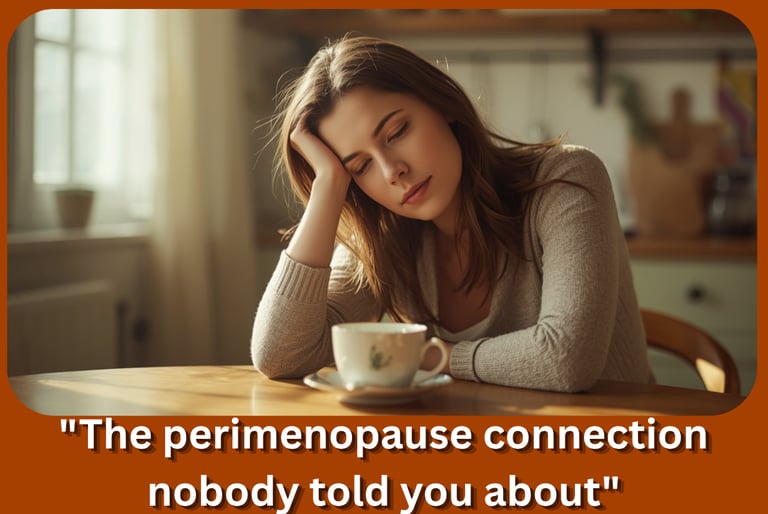
Image: A woman in her early 40s experiencing the quiet, persistent exhaustion that perimenopause brings.
You went to bed at a reasonable hour. You didn't stay up scrolling. You haven't run a marathon. You aren't fighting an illness.
And yet you woke up — again — feeling like you barely slept at all.
By 2pm, your eyelids are heavy. By 8pm, you're done. And no matter how many early nights you have or how much coffee you drink in the morning, nothing seems to shift the bone-deep tiredness that has crept into your life somewhere between your 38th and 45th birthday.
If this sounds familiar, you are not alone — and more importantly, you are not imagining it.
<cite index="37-1">According to the Study of Women's Health Across the Nation (SWAN), approximately 85% of women report fatigue as a symptom during perimenopause and menopause</cite> — making it one of the most common, and most misunderstood, signs that your hormones are shifting.
But here's what most articles, and most doctors, won't tell you: this exhaustion has a very specific biological cause. And once you understand it, you can actually do something about it.
First Things First — What Exactly Is Perimenopause?
Perimenopause is the hormonal transition your body makes in the years before your last period. It is not menopause itself — it is the runway leading up to it.
And here is the part that surprises most women: <cite index="37-1">hormonal fluctuations associated with perimenopause often begin in the late 30s to early 40s, several years before your final menstrual period — and those changes can affect your energy long before you realise you're in perimenopause.</cite>
This means that the tiredness you've been attributing to stress, to your workload, to being a busy woman in midlife — may actually have a hormonal root cause that no amount of rest, vitamins, or positive thinking can fully address on its own.
The good news? Once you name it, you can treat it.
Why Perimenopause Makes You So Exhausted: The Science
Your fatigue is not weakness. It is biology. Here are the four main hormonal mechanisms driving it.
1. Falling Oestrogen Disrupts Your Brain's Energy System
Oestrogen is far more than a reproductive hormone. It plays a critical role in regulating your brain chemistry — specifically the neurotransmitters serotonin and dopamine, which directly influence your mood, motivation, and energy levels.
<cite index="38-1">As oestrogen levels fall, it modulates neurotransmitters like serotonin and dopamine, which are vital for mood and energy. As levels decline, mood disruptions, poor sleep, and fatigue become more prominent.</cite>
Think of oestrogen as the conductor of your body's energy orchestra. When it starts dropping, the instruments fall out of tune — and the result is a pervasive flatness, a lack of the natural drive and vitality you used to take for granted.
2. Falling Progesterone Steals Your Sleep
While oestrogen gets most of the attention, progesterone is equally important — especially for sleep.
Progesterone has a natural calming, sleep-promoting effect on the brain. It works similarly to a mild sedative, helping you fall asleep and stay in deep, restorative sleep cycles. As progesterone declines during perimenopause, many women notice they start waking in the night — often around 3am — for no obvious reason.
<cite index="35-1">Declining progesterone, recognised for its calming, sleep-promoting effects, contributes significantly to the extreme fatigue many perimenopausal women experience. Hot flashes, night sweats, and anxiety can make sleep fragmented and shallow, adding further fuel to the fatigue cycle.</cite>
Night after night of shallow, broken sleep accumulates into a chronic sleep debt that no single good night can repair. This is why you can sleep for nine hours and still wake up exhausted.
3. Rising Cortisol Keeps You Wired and Depleted at the Same Time
Here is the mechanism that most mainstream health advice misses entirely — and it explains why perimenopausal fatigue feels so different from ordinary tiredness.
<cite index="34-1">When oestrogen drops, your adrenal glands work harder to compensate, pumping out more cortisol. Chronically elevated cortisol keeps your body in a state of stress, burning through energy reserves faster than you can replenish them.</cite>
This creates a deeply frustrating pattern: you feel too tired to function, but too wired to truly rest. You may find yourself lying awake even when you're exhausted, or crashing hard in the afternoon only to feel inexplicably alert at 10pm. This is cortisol dysregulation — and it is extremely common in perimenopause.
<cite index="39-1">Chronic stress worsens fatigue by keeping cortisol elevated, which interferes with sleep and destabilises blood sugar. This creates a challenging cycle where stress worsens perimenopausal symptoms, and perimenopausal symptoms create more stress.</cite>
4. Your Mitochondria — Your Cellular Energy Factories — Are Struggling
This is the piece of the puzzle that science is only beginning to fully understand, but the early findings are striking.
<cite index="37-1">Mitochondria are responsible for producing adenosine triphosphate (ATP), the energy currency your body uses for everything from thinking and moving to hormone production and immune response. When hormone levels fluctuate during perimenopause and menopause, mitochondrial health is often impacted too.</cite>
In plain terms: the very cells responsible for generating your energy are becoming less efficient at exactly the time your hormones are dropping. This is not something you can fix with an early night or a green smoothie. It requires a more targeted approach.
"But My Doctor Said Everything Looks Normal"
If you've had blood tests and been told your results are fine, you are not alone in feeling confused and dismissed.
Here's something critically important to understand: standard blood tests are not designed to detect early perimenopause. FSH (follicle-stimulating hormone) levels — the most commonly tested marker — can appear normal in the early stages of the transition, even when your progesterone is already declining and your symptoms are very real.
<cite index="5-1">A December 2025 study found that one in three women were unsure of their reproductive stage, with women frequently describing being dismissed by doctors who attributed symptoms to stress or age, and being told they were too young despite significant symptom burden.</cite>
You are not too young. You are not just stressed. And you are not, as one of our readers told us she was told, "just a busy working mum."
The Hidden Nutritional Drain That Makes It Worse
Beyond hormones, perimenopause creates nutritional vulnerabilities that amplify fatigue significantly. The four most important ones:
Iron: Heavy or irregular periods — very common in perimenopause — can significantly deplete iron stores. <cite index="44-1">Declining oestrogen also affects how efficiently your body absorbs and utilises iron, resulting in persistent fatigue that doesn't improve with more sleep.</cite> If your tiredness is accompanied by unusual coldness, paleness, or breathlessness, ask your GP specifically to check your ferritin (stored iron), not just your haemoglobin.
Magnesium: <cite index="34-1">Nutritional deficiencies in iron, B12, vitamin D, and magnesium often worsen midlife fatigue.</cite> Magnesium is involved in over 300 cellular processes — including sleep regulation, cortisol control, and energy production. Most women are deficient without knowing it.
Vitamin D: Low vitamin D is linked to low mood, fatigue, and poor immunity. If you live in the UK or a low-sun region, deficiency is extremely common and easily addressed with supplementation.
B Vitamins: B12 supports nerve function and red blood cell production. B6 helps regulate mood. <cite index="42-1">A study found that deficiencies in vitamins B6, B12, D, and E were common among perimenopausal women and contributed to increased fatigue, cognitive decline, and mood disorders.</cite>
7 Natural Ways to Reclaim Your Energy During Perimenopause
Here is what the evidence supports. These are not magic fixes — but they are real, research-backed strategies that address the root causes of perimenopause fatigue.
1. Prioritise Magnesium Glycinate Before Bed
Of all the supplement changes you can make, this is the one with the most immediate and noticeable effect on sleep and energy.
<cite index="43-1">Magnesium glycinate is particularly effective for both sleep quality and anxiety relief. This highly absorbable form helps regulate neurotransmitters that promote relaxation without morning grogginess.</cite>
Take 200–400mg of magnesium glycinate 30–60 minutes before bed. Check with your GP before starting, especially if you take other medications.
2. Try Ashwagandha for Cortisol and Stress Resilience
Ashwagandha is one of the most well-studied adaptogenic herbs for perimenopausal women. <cite index="43-1">Ashwagandha has strong research for reducing cortisol levels and improving sleep quality, with studies showing significant improvements in sleep onset and duration after 6–8 weeks of use.</cite>
It works by calming the HPA axis — the system that regulates your stress response — which is exactly the mechanism that gets dysregulated as oestrogen falls. Look for a standardised extract (KSM-66 or Sensoril) and take it consistently for at least 6 weeks before evaluating.
3. Stabilise Your Blood Sugar to Reduce Energy Crashes
This is one of the least-discussed but most impactful changes you can make. As oestrogen declines, insulin sensitivity decreases — meaning your body handles blood sugar less efficiently.
The result: energy spikes and crashes, increased cravings, and afternoon fatigue that hits like a wall.
The fix is straightforward:
Start every meal with protein (aim for 25–30g per meal)
Never eat carbohydrates alone — always pair them with protein or fat
Eat within an hour of waking
Avoid skipping meals, especially breakfast
4. Strength Train — Even When You Don't Feel Like It
<cite index="36-1">Studies show that even gentle movement improves energy by 40% in perimenopausal women experiencing low energy.</cite> But resistance training specifically offers something cardio cannot: it improves insulin sensitivity, supports hormone balance, builds muscle (which improves metabolism), and triggers the release of feel-good neurotransmitters.
Two to three sessions per week of 20–30 minutes is enough to make a measurable difference. You do not need to feel energised before you start — the energy comes during and after.
5. Get a Full Blood Panel — Not Just the Standard Check
Ask your GP for a comprehensive check that includes:
Ferritin (stored iron)
Vitamin D (25-OH)
B12
Thyroid panel (TSH, free T3, free T4)
Full blood count
Thyroid dysfunction is common in perimenopausal women and shares many of the same symptoms as perimenopause fatigue. <cite index="34-1">Some women may experience mild thyroid changes during this transition where thyroid levels test "normal" but are actually suboptimal — and symptoms overlap significantly with perimenopause.</cite> A thorough panel rules this out and gives you a clear baseline.
6. Protect Your Sleep Architecture
It's not just about how many hours you sleep — it's about the quality and structure of those hours. Perimenopause disrupts deep sleep specifically, which is when your body repairs, regenerates, and rebalances hormones.
Practical steps that actually work:
Keep your bedroom cool (between 16–18°C / 60–65°F)
Stop screens at least 60 minutes before bed
Avoid alcohol — it fragments sleep architecture significantly
Eat a small protein-rich snack before bed to stabilise overnight blood sugar
Consider magnesium glycinate and ashwagandha as part of your evening routine
7. Support Your Adrenal Glands
Your adrenal glands bear the burden of compensating for falling oestrogen — which is why chronic stress hits perimenopausal women so much harder than it used to.
Beyond ashwagandha, these practices have meaningful evidence behind them:
Box breathing (inhale 4 counts, hold 4, exhale 4, hold 4) — directly lowers cortisol
Walking in natural light in the morning — resets your cortisol rhythm
Reducing caffeine after midday — caffeine spikes cortisol and worsens the adrenal burden
Rhodiola rosea — an adaptogen with evidence for fatigue, burnout, and stress resilience
When to See a Doctor
Natural approaches can do a great deal, but some situations require professional evaluation. See your GP or a women's health specialist if:
Your fatigue is severe or worsening despite lifestyle changes
You are sleeping more than 9 hours and still exhausted
You have unexplained weight gain, hair loss, or extreme coldness (possible thyroid issue)
Your periods have become very heavy or very irregular
You feel persistently low in mood or unable to function at work or at home
There is no medal for managing alone. Good support — whether from a knowledgeable GP, a women's health clinic, or a qualified nutritionist — makes the process significantly easier and faster.
A Note From Dr. Kayla
"In my clinical experience, perimenopause fatigue is one of the most under-diagnosed and over-normalised conditions in women's health. Women are told to rest more, stress less, or 'take it easy' — as though the solution to a hormonal transition is simply trying harder. It isn't. What we know from the research is that targeted nutritional support, strategic exercise, and adaptogenic herbs can make a genuinely significant difference in energy levels within 6–12 weeks. You don't have to white-knuckle your way through your 40s. There are real, evidence-based tools available to you — and you deserve access to them."
— Dr. Kayla Philips, MD
Women's Health Specialist, Body Essential Hub
The Bottom Line
If you are exhausted in your 40s, the most likely explanation is not that you are lazy, or weak, or simply getting older. The most likely explanation is that your hormones are shifting — and your body is telling you, loudly, that it needs different support than it did at 30.
The fatigue of perimenopause is real. It is biological. It is measurable. And it is manageable — with the right knowledge, the right nutrition, the right movement, and the right support.
You don't have to guess your way through this. And you don't have to do it alone.
Take Your Next Step
📖 Want the complete, science-backed plan for managing perimenopause naturally?
Our ebook Natural Perimenopause Relief in Your 30s and 40s covers everything in this article — and goes much deeper, including:
✅ The complete herbal adaptogen protocol (with dosing guides)
✅ A 4-week strength training programme for perimenopausal women
✅ Hormone-balancing nutrition plans and meal frameworks
✅ The sleep restoration protocol
✅ How to talk to your doctor about perimenopause (and what to ask for)
→ Get the Ebook Now — Natural Perimenopause Relief
📋 Not ready to buy yet?
Start with our free 28-Day Wellness & BMI Journal — your daily companion for tracking mood, energy, sleep, water, movement and more during your perimenopause journey.
Frequently Asked Questions
Q: Can perimenopause really start in my 30s?
Yes. While perimenopause most commonly begins in the mid-40s, symptoms — including fatigue, mood changes, and sleep disruption — can start as early as the mid-to-late 30s. If you are 35–39 and experiencing unexplained tiredness alongside cycle changes or mood shifts, perimenopause is worth discussing with your GP.
Q: How do I know if my fatigue is perimenopause and not just stress or depression?
Perimenopause fatigue typically clusters with other symptoms — poor sleep, mood changes, irregular periods, or new anxiety. It also tends to worsen around your cycle. If lifestyle changes haven't helped and symptoms are worsening, a comprehensive blood panel and a conversation with a women's health specialist is the best next step.
Q: How long does perimenopause fatigue last?
<cite index="35-1">Perimenopause can span 4 to 10 years. Fatigue often fluctuates throughout this time, peaking in the late 30s to mid-40s and potentially easing after menopause when hormone levels stabilise.</cite> With targeted support, many women see meaningful improvement in energy within 6–12 weeks.
Q: Is it safe to take ashwagandha during perimenopause?
Ashwagandha is generally well-tolerated and has a strong safety profile in clinical studies. However, it is not suitable for everyone — particularly those on thyroid medication, immunosuppressants, or sedatives. Always check with your GP before starting any new supplement.
Q: Do I need HRT to fix perimenopause fatigue?
Not necessarily. Many women see significant improvement in energy through nutritional support, adaptogenic herbs, sleep optimisation, and strength training. Our ebook covers the full natural protocol. That said, HRT is a valid and effective option for some women — a decision best made in conversation with a knowledgeable GP or women's health specialist.
References
Study of Women's Health Across the Nation (SWAN) — Fatigue and perimenopause, published in Menopause Journal
npj Women's Health (2025) — Perimenopausal symptoms in women aged 30–40: prevalence and burden
International Journal of Science and Technology (2025) — Endocrine and metabolic mechanisms underlying fatigue in perimenopause
Scientific Reports (2025) — Analysis of 145,000 symptom logs in perimenopausal women
Journal of Clinical Medicine (2025) — Sleep disturbances in perimenopause: a narrative review
Prz Menopauzalny (2018) — Vitamin deficiencies and menopausal symptom burden
Nutrients (2023) — Diet, supplementation and management of menopause symptoms
This article is for informational purposes only and does not constitute medical advice. Always consult a qualified healthcare professional before making changes to your diet, supplementation, or exercise routine. Body Essential Hub content is reviewed by Dr. Kayla Philips, MD.
Body Essential Hub | bodyessentialhub.com
Stay healthy. Stay motivated. Stay essential.
Tags: perimenopause fatigue, tired in your 40s, perimenopause symptoms, natural perimenopause relief, hormone fatigue women, perimenopause energy, ashwagandha perimenopause, magnesium perimenopause, perimenopause natural remedies, women's health 40s
SEO Meta Title: Why Am I So Tired in My 40s? Perimenopause Fatigue Explained | Body Essential Hub
SEO Meta Description: Up to 85% of perimenopausal women experience crushing fatigue. Discover the 4 hormonal causes of perimenopause tiredness in your 40s — and 7 evidence-backed natural strategies to reclaim your energy.
Primary Keyword: why am I so tired in my 40s perimenopause
Secondary Keywords: perimenopause fatigue natural remedies, oestrogen fatigue women 40s, ashwagandha cortisol perimenopause, magnesium perimenopause sleep





Elevate your health with our premium products.
Contact
About
info@bodyessentialhub.com
+1234567890
© 2024. All rights reserved.
bodyessentialhub2